Seasonal Tire Changeovers on Long Island and in Westchester
Winter tires on Long Island and in Westchester: who needs them, when to swap, New York's studded tire dates, and how to store tires off season.
By Don Marsico
Parts Manager, GMC Bedford Hills
Reviewed by Lawrence V. Parisi, Executive Manager, GMC Bedford Hills
Updated · 6 min read
Key points
- Winter tires grip better than all-season tires in snow, slush and cold, and NHTSA notes they are more effective in deep snow.
- Drivers in the hills of northern Westchester get more out of winter tires than most drivers on Long Island's flatter, milder roads, but both can benefit.
- New York allows tires with metal studs only from October 16 through April 30, according to the DMV.
- A second set of wheels makes each changeover quicker, and stored tires last longest clean, cool, dry and out of the sun.
Winter tires are not required anywhere in New York, but they make a real difference in snow, slush and cold, especially on the hills of northern Westchester. On Long Island, good all-season tires are enough for many drivers, while early commuters and anyone who wants the most grip on ice gain from a winter set. The usual plan is to swap to winter tires once cold weather sets in and back again in spring.
Oct 16
Studded tires allowed from
Through April 30, per the NYS DMV
2/32 in
Minimum tread depth
NHTSA guidance
At GMC Bedford Hills, November is when the tire questions start. Drivers from Bedford and Mount Kisco ask whether they need winter tires, when to put them on and what to do with the set coming off. This guide answers those questions from the parts counter, using guidance from NHTSA and the New York State DMV.
Four-wheel drive helps a truck or SUV get moving, but it does not help it stop or turn on ice.
 Don MarsicoParts Manager, GMC Bedford Hills
Do you need winter tires on Long Island or in Westchester?
You do not need them by law, but whether they are worth it depends on where you drive and when.
Winter tires use a softer rubber that stays flexible in the cold, plus deep tread and many small slits called sipes that bite into snow and ice. All-season tires are a compromise. They work well most of the year, but their rubber stiffens as it gets colder, and their grip falls off in snow. NHTSA’s winter driving guidance notes that winter tires are more effective than all-season tires in deep snow.
Geography matters here. Northern Westchester has steep, winding, tree-shaded roads, and some of them stay icy long after the main roads are clear. If your morning starts on a back road in Bedford or Pound Ridge, winter tires earn their keep. Long Island’s North Shore around Great Neck is flatter and closer to the water, and snow often melts faster. There, good all-season tires with healthy tread may be all you need, unless you drive early, every day, whatever the weather.
| Your driving | Our suggestion |
|---|---|
| Hilly back roads | Winter tires |
| Daily early commute | Winter tires |
| Mostly main roads | Good all-seasons |
| Can stay home | Good all-seasons |
Four-wheel drive helps a truck or SUV get moving, but it does not help it stop or turn on ice. Tires do that. A Sierra or Yukon on winter tires stops and steers far better on snow than the same vehicle on worn all-seasons.
When to change over, and New York’s studded tire rule
Swap to winter tires once the cold settles in for the season, and back to all-season or summer tires once it is clearly over.
There is no single right day. Many drivers make the change around Thanksgiving and switch back in late March or April, adjusting for the forecast. Putting winter tires on too early, or leaving them on through warm spring weather, wears the soft rubber faster.
If you choose studded tires, timing is set by law. The New York State DMV says tires with metal studs may be used only from October 16 through April 30. Studded tires still have to pass the normal tire checks at inspection. Most drivers in our area choose studless winter tires, which grip well on ice and snow and are quieter on dry pavement.

Whatever you run, check pressure often as it gets colder. NHTSA notes that tire pressure drops as the temperature falls. Check it when the tires are cold, and use the pressure on the label inside the driver’s door frame, not the maximum printed on the tire.
“Andy and his Service Staff are a godsend! Polite, honest, and compassionate! Come here for all your GM repairs!”
Winter tires on wheels, or swapped on one set
A second set of wheels makes every changeover faster and easier on your tires.
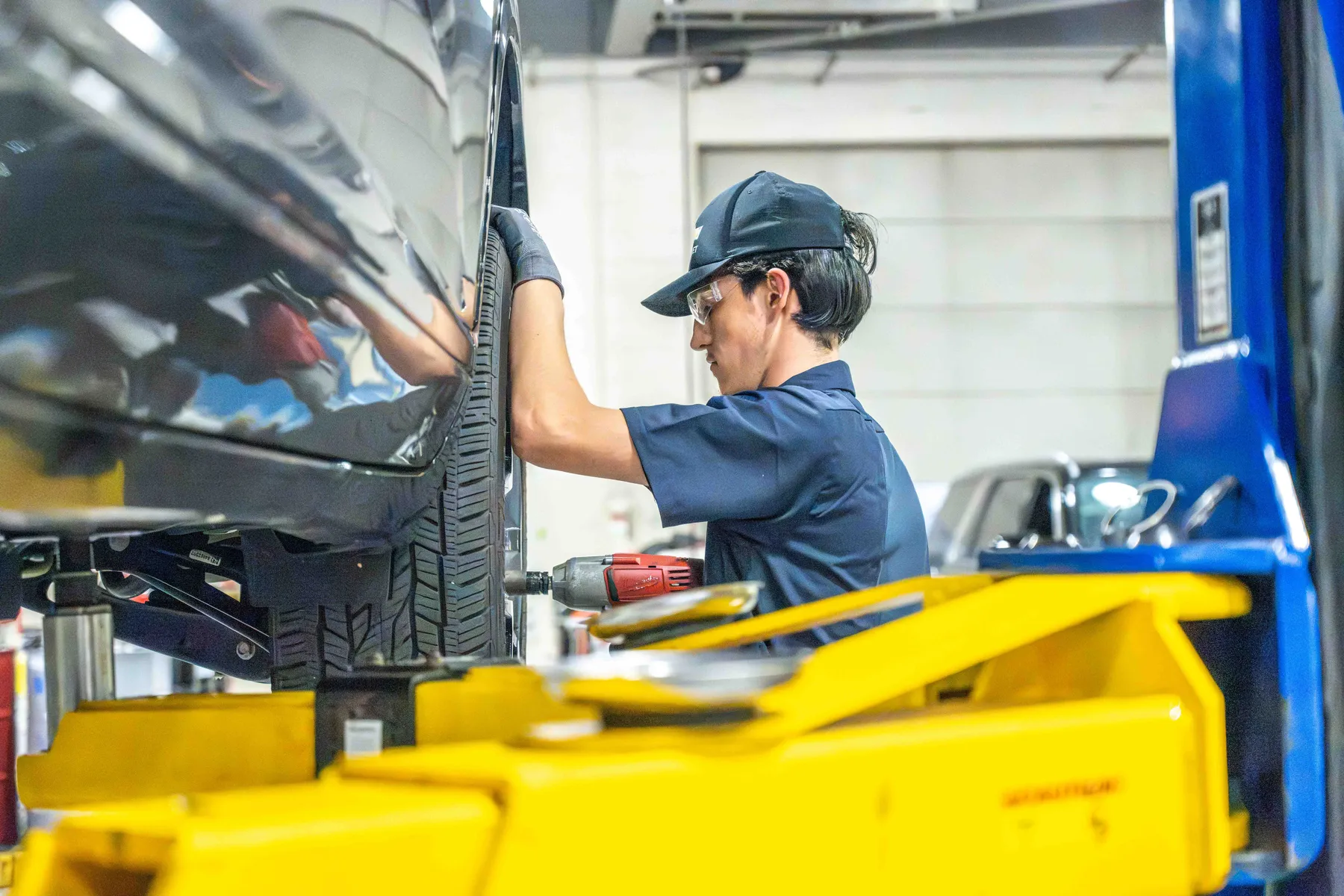
There are two ways to run winter tires. You can mount them on a dedicated set of wheels, so each changeover is a simple wheel swap. Or you can have the tires dismounted and remounted on your original wheels twice a year. Dedicated wheels cost more up front, but the swap is quicker, there is less handling of the tire beads, and many drivers choose a simpler, smaller wheel for winter that is less precious against road salt.
| Option | Up front | Each swap |
|---|---|---|
| Second wheel set | Higher | Quicker |
| Same wheels | Lower | Remount each time |
If you go with a second set of wheels, a few details matter. The wheels need the right size, bolt pattern and load rating for your truck or SUV. On modern vehicles, tire pressure monitoring sensors are part of the picture too, so ask about sensors when you price a winter set. Our parts department can help you check what fits your exact GMC model and trim. Call us with your VIN, and we will look it up.
Tire storage between seasons
Stored tires last longest when they are clean, dry, cool and out of the sun.
Whether the set you take off is winter or all-season, a little care helps it come back in good shape:
- Clean them first. Wash off road salt and brake dust, and let the tires dry fully.
- Mark their positions. Note which corner each tire came from, so you can rotate them when they go back on.
- Keep them out of the sun. Sunlight and heat age rubber. A basement or the back of a garage, away from windows, works well.
- Keep them away from motors. Furnaces, generators and electric motors give off ozone, which can crack rubber over time.
- Store them sensibly. Tires on wheels can be stacked flat or hung. Tires without wheels are best stored upright and turned now and then.
- Use tire bags. They keep dust off and make the set easier to carry.

Every changeover is also a chance to check tread depth and age. NHTSA cites 2/32 of an inch as the minimum tread on every tire, and suggests the penny test: place a penny in the tread with Lincoln’s head upside down, and if you can see the top of his head, it is time for new tires. Look at the sidewalls for cuts, bulges and cracks too. Some manufacturers recommend replacing tires after a certain number of years whatever the tread looks like, so check the date code on older tires.
Putting winter tires on too early, or leaving them on through warm spring weather, wears the soft rubber faster.
Don MarsicoParts Manager, GMC Bedford HillsGetting your truck or SUV ready for winter
A tire changeover pairs well with a full pre-winter check of the rest of your vehicle.
Tires are only one part of winter readiness. Wipers, washer fluid, the battery and lights all work harder from December to March. Our winter car prep checklist walks through each one. If your inspection is coming up this winter, our guide to the New York State inspection shows how tires and other items are checked.
GMC Bedford Hills, formerly Vail Buick GMC, is at 606 Bedford Rd in Bedford Hills. Our service hours are Monday to Friday 7:30 to 5:30. Call 914-666-7537 to talk with our parts team about winter tires and wheels for your GMC, or book a service visit online for a tire check before the first storm. You can find more care guides in our Service & Care section.
Questions
Do I need snow tires in Westchester?
Snow tires are not required in Westchester, but they help a lot on the hilly, shaded back roads around Bedford and Mount Kisco. GMC Bedford Hills can talk through whether winter tires make sense for your truck or SUV and how you drive.
Are winter tires worth it on Long Island?
For many Long Island drivers, good all-season tires with healthy tread are enough, since snow on the coast often melts quickly. Winter tires are worth it if you drive early in the morning, commute every day regardless of weather, or want the most grip on ice and slush.
When can I use studded tires in New York?
The New York State DMV says tires with metal studs may be used only from October 16 through April 30. Studded tires still have to meet normal inspection standards.
How should I store tires off season?
Clean the tires, let them dry, and store them in a cool, dry place out of direct sunlight and away from heat sources and electric motors. Mounted tires on wheels can be stacked or hung, and GMC Bedford Hills can check them for wear before they go back on.
Written by Don Marsico with the DriveWise editorial team. Prices, incentives and specifications change, so confirm details with the store before you buy. Editorial standards

Weidinger Auto: Always Moving Forward
Family-owned since 1938 · Six stores on Long Island and in Westchester