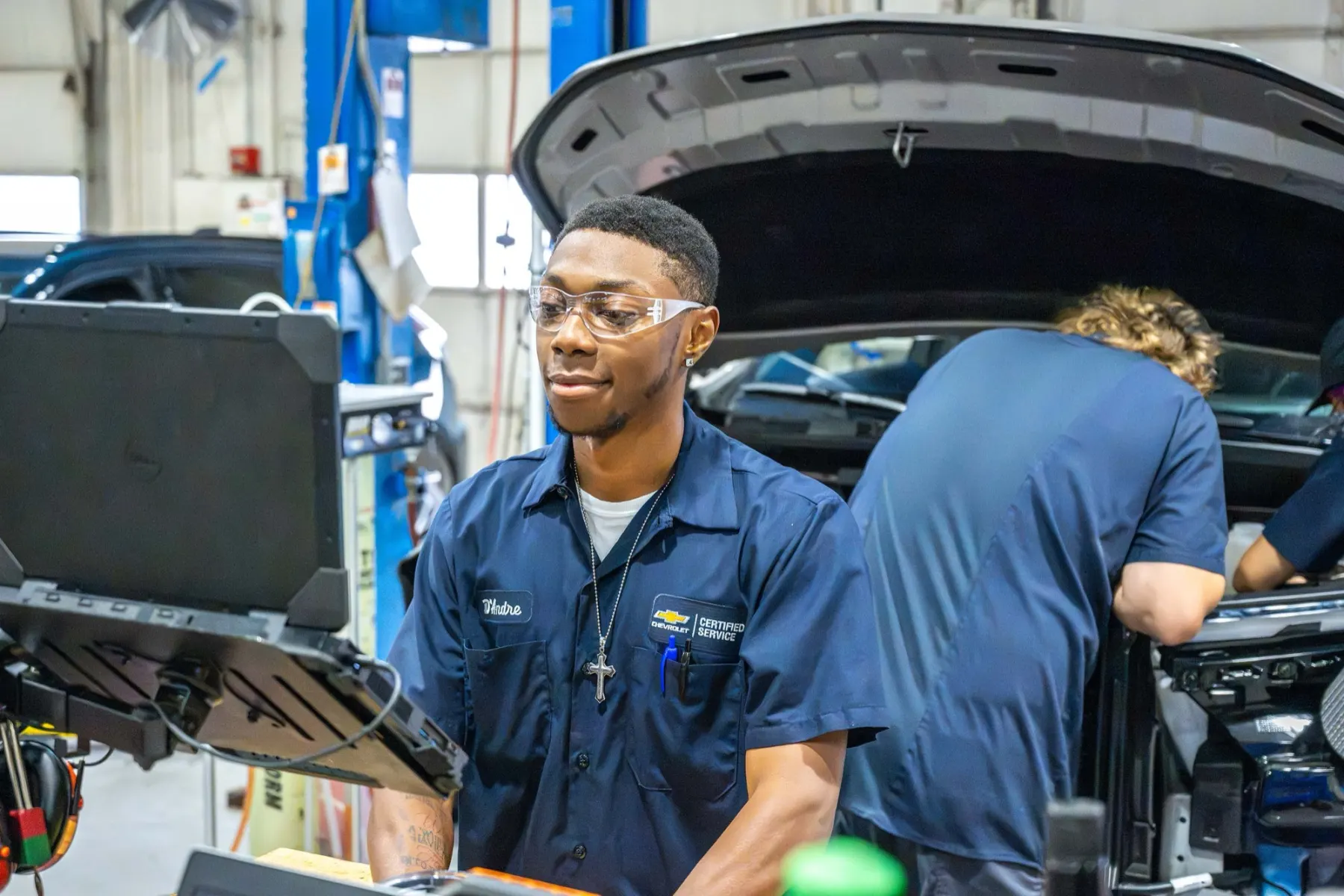
Getting Your Car Ready for a New York Winter
A winter car maintenance checklist for northern Westchester: tires, battery, wipers, coolant, recalls and the emergency kit to keep in the car.
Service Manager, Cadillac Mount Kisco
Reviewed by Chad Harris, General Manager, Cadillac Mount Kisco
Updated · 5 min read
Key points
- Check tire pressure when the tires are cold and set it to the figure on the driver's door frame, not the number on the tire. Pressure drops as the temperature falls.
- Cold weather makes a gas or diesel engine work the battery harder and can reduce an electric vehicle's range. Have the battery and charging system checked before the first hard freeze.
- Fill the washer reservoir with winter fluid, replace worn wiper blades and have the coolant tested.
- Look up open recalls by VIN at NHTSA.gov/Recalls, and keep a winter emergency kit in the car from now until spring.
The best time to get a car ready for winter is before the first snow, not during it. A good winter car maintenance checklist covers tire pressure and tread, the battery, wipers and washer fluid, coolant, lights and open recalls. Add an emergency kit to the trunk, and most cars will handle a Westchester winter without surprises.
Cold
When to check tire pressure
After the car sits at least three hours
Door frame
Where the right pressure is listed
Not the number on the tire
NHTSA.gov/Recalls
Where to check recalls by VIN
The checklist below follows the winter guidance from the National Highway Traffic Safety Administration, with notes from our service drive in Mount Kisco. Most of it takes only minutes, and the rest fits into one service visit. Drivers in Mount Kisco, Chappaqua and Armonk see plenty of cold mornings, hills and salted roads, so each item earns its place.
Start with the tires
Tires are the first thing to check, because they are the only part of the car touching an icy road. Look at pressure and tread now, and decide whether you want winter tires.
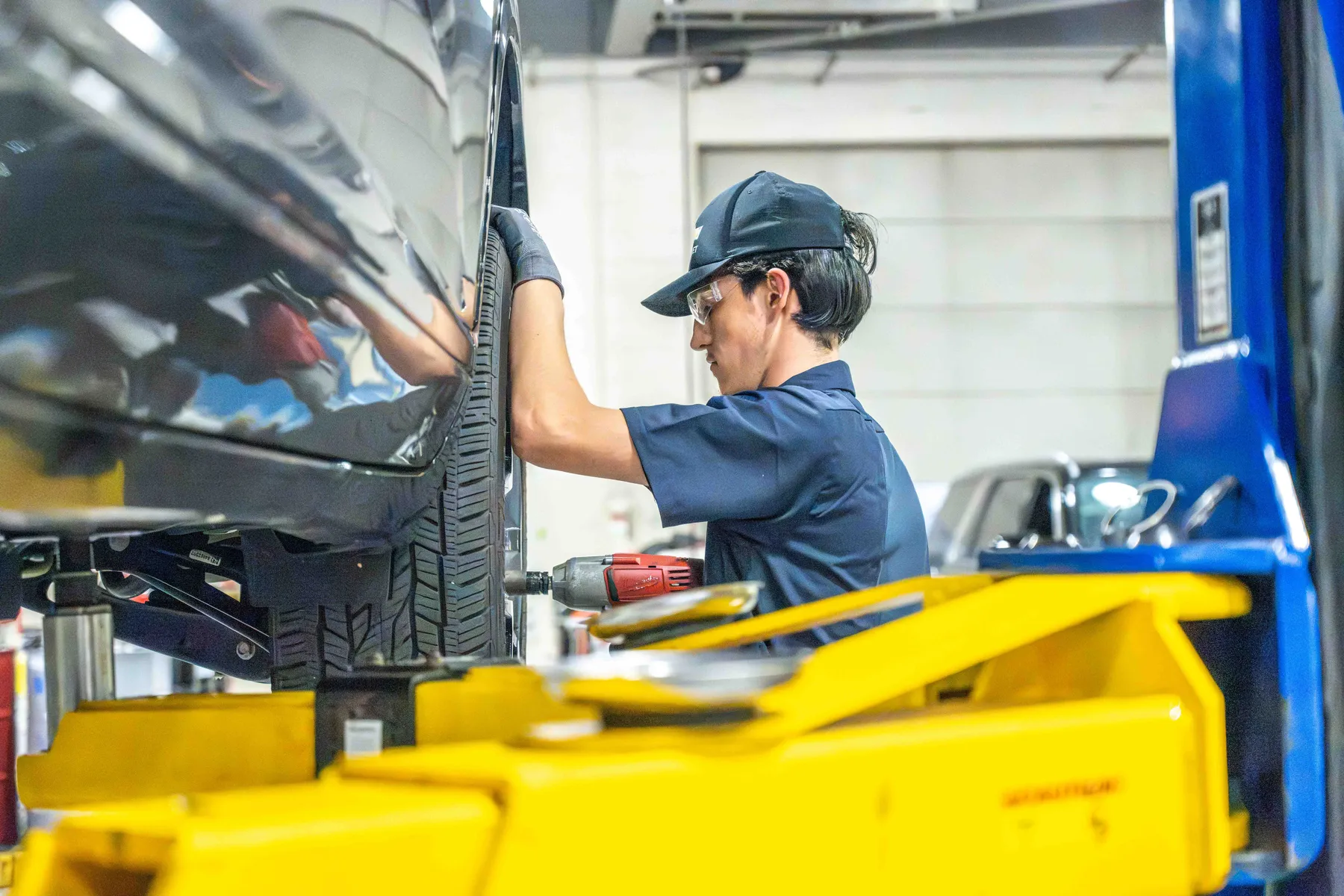
Air pressure falls as the temperature falls, so a tire set correctly in September can be low by December. NHTSA advises checking pressure when the tires are cold, after the car has sat for at least three hours. Inflate to the pressure on the placard on the driver’s door frame. The number molded into the tire’s sidewall is the tire’s maximum, not the right setting for your car.
Tread depth matters as much as pressure on snow and slush. If you are unsure how much tread is left, ask us to measure it. Many drivers here switch to winter tires for the season. All-season tires are a compromise, while winter tires are built for cold rubber, snow and ice. If you already own a set, book the change early.
| Tire check | When | Why |
|---|---|---|
| Pressure | Monthly, cold | Drops with cold |
| Tread | Before winter | Grip on snow |
| Winter tires | Early November | Cold-weather grip |
| Spare or kit | Once a season | Ready when needed |
Have the battery and charging system checked
Cold weather is hard on batteries. NHTSA notes that a gas or diesel engine needs more battery power to start in the cold, and that an electric or hybrid vehicle’s driving range can drop.
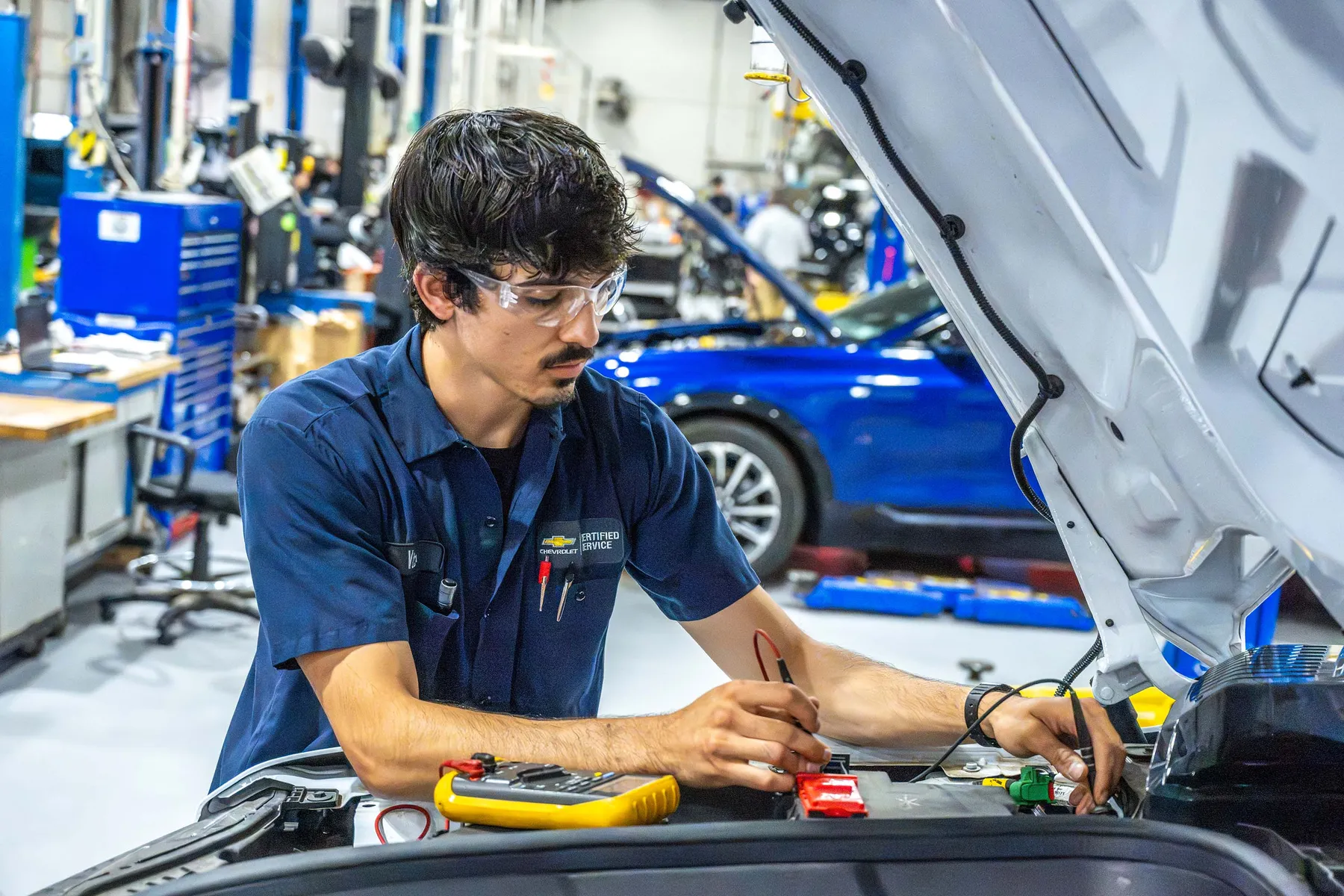
A battery that started the car easily all fall can fail on the first single-digit morning. NHTSA suggests having a technician check the battery, the charging system and the belts before winter. A test takes little time and tells you whether the battery is likely to make it through the season.
If you drive an electric Cadillac, plan for shorter range in the cold and keep the battery charged at home. Preconditioning the cabin while the car is still plugged in uses grid power instead of the battery. Our guide to charging an EV at home covers home charging in Westchester, and our electric Cadillac guide compares the four models.
“Dropped off car for recalls and maintenance. Ceasar and team. Acted very professional. Service team made sure the Escalde was returned better than when dropped off. Highly satisfied. Also was given a detailed breakdown of work. And recommendations. Sam”
Wipers, washer fluid, coolant and lights
Clear vision and a healthy cooling system are the next priorities. Each of these checks is quick, and most can be done at the same visit.
- Wiper blades. Replace blades that streak, chatter or leave gaps. NHTSA suggests heavy-duty winter blades in areas with a lot of snow and ice.
- Washer fluid. Fill the reservoir with winter washer fluid that contains de-icer. Summer fluid can freeze, and salt spray uses fluid quickly.
- Coolant. Have the cooling system checked for leaks and the coolant tested, and replaced if it is due.
- Lights. Check every headlight, taillight and turn signal. Short days mean more driving in the dark.
A battery that started the car easily all fall can fail on the first single-digit morning.
One more habit helps: brush all the snow off the car before you drive, including the roof, the lights and the cameras and sensors that driver assistance features rely on. A snow-covered sensor can switch those features off until it is clear.
Check for recalls before winter
An open recall is worth fixing before the roads turn bad. You can check any car for free at NHTSA.gov/Recalls by entering its 17-character vehicle identification number.
The VIN is on your registration and insurance card, and on a small plate where the dashboard meets the windshield on the driver’s side. If a recall comes up for a Cadillac, we can schedule the repair. Recall repairs are done at no charge to the owner.
This is also a good time to look at the maintenance reminders in your car or in its app. If service is due in the next month or two, combining it with your winter check saves a second trip.
Build a winter emergency kit for the car
A winter emergency kit covers you if you are stuck or stranded. Keep it in the car from now until spring.
NHTSA’s winter guidance suggests these items:
- Cell phone and charger
- Blankets and warm clothing
- Water and non-perishable food, plus any medicine you need
- Flares or emergency markers
- Snow shovel, brush and ice scraper
- Sand or cat litter for traction if a wheel spins
If you are ever stuck, NHTSA advises staying with the car. Clear snow away from the exhaust pipe and run the engine only long enough to stay warm, to avoid carbon monoxide building up inside. Never run a car for long periods with the windows up or in an enclosed space, such as a garage.
Winterize your car at Cadillac Mount Kisco
The easiest way to winterize your car is to book one visit for all of it. Our service department can check the tires, battery, wipers, fluids and lights, look up open recalls and handle any maintenance that is due.
A battery that started the car easily all fall can fail on the first single-digit morning. That is the call nobody wants to make, so we suggest booking before Thanksgiving. Our store has a covered service drive and 14 service bays, so you can drop off and pick up out of the weather.
Cadillac Mount Kisco is at 271 N Bedford Rd, Mount Kisco, NY 10549, and the phone number is 914-362-1300. Service hours are Mon-Fri 8:00-5:00. You can book online through service booking. If you want to know more about the store itself, read our introduction to Cadillac Mount Kisco. More maintenance guides are in DriveWise Service & Care.
Questions
What should a winter car maintenance checklist include?
A winter car maintenance checklist should cover tire pressure and tread, the battery and charging system, wiper blades and winter washer fluid, coolant, lights and an open-recall check by VIN. Cadillac Mount Kisco's service department can inspect these in one visit.
What should be in a winter emergency kit for the car?
NHTSA suggests a cell phone and charger, blankets, water, non-perishable food and any needed medicine, plus flares or emergency markers, a snow shovel, a brush and ice scraper, and sand or cat litter for traction if the car gets stuck.
Why does tire pressure drop in winter?
Tire pressure drops in winter because air pressure falls as the outside temperature falls. NHTSA advises checking pressure when the tires are cold and inflating to the vehicle maker's figure on the driver's door frame.
Do electric Cadillacs need winter preparation too?
Yes. Electric Cadillacs like the LYRIQ still need tire, wiper and washer fluid checks, and cold weather can reduce an electric vehicle's driving range. Cadillac Mount Kisco's service department can look over an electric Cadillac before winter.
Written by Philip Augustine with the DriveWise editorial team. Prices, incentives and specifications change, so confirm details with the store before you buy. Editorial standards

Weidinger Auto: Always Moving Forward
Family-owned since 1938 · Six stores on Long Island and in Westchester