Charging an EV at Home on Long Island and in Westchester: A Practical Guide
How to set up Level 2 home charging in Nassau County or northern Westchester: the electrician visit, permits, utility programs and overnight rates.
Business Development Manager and EV Specialist, GMC Bedford Hills
Updated · 7 min read
Key points
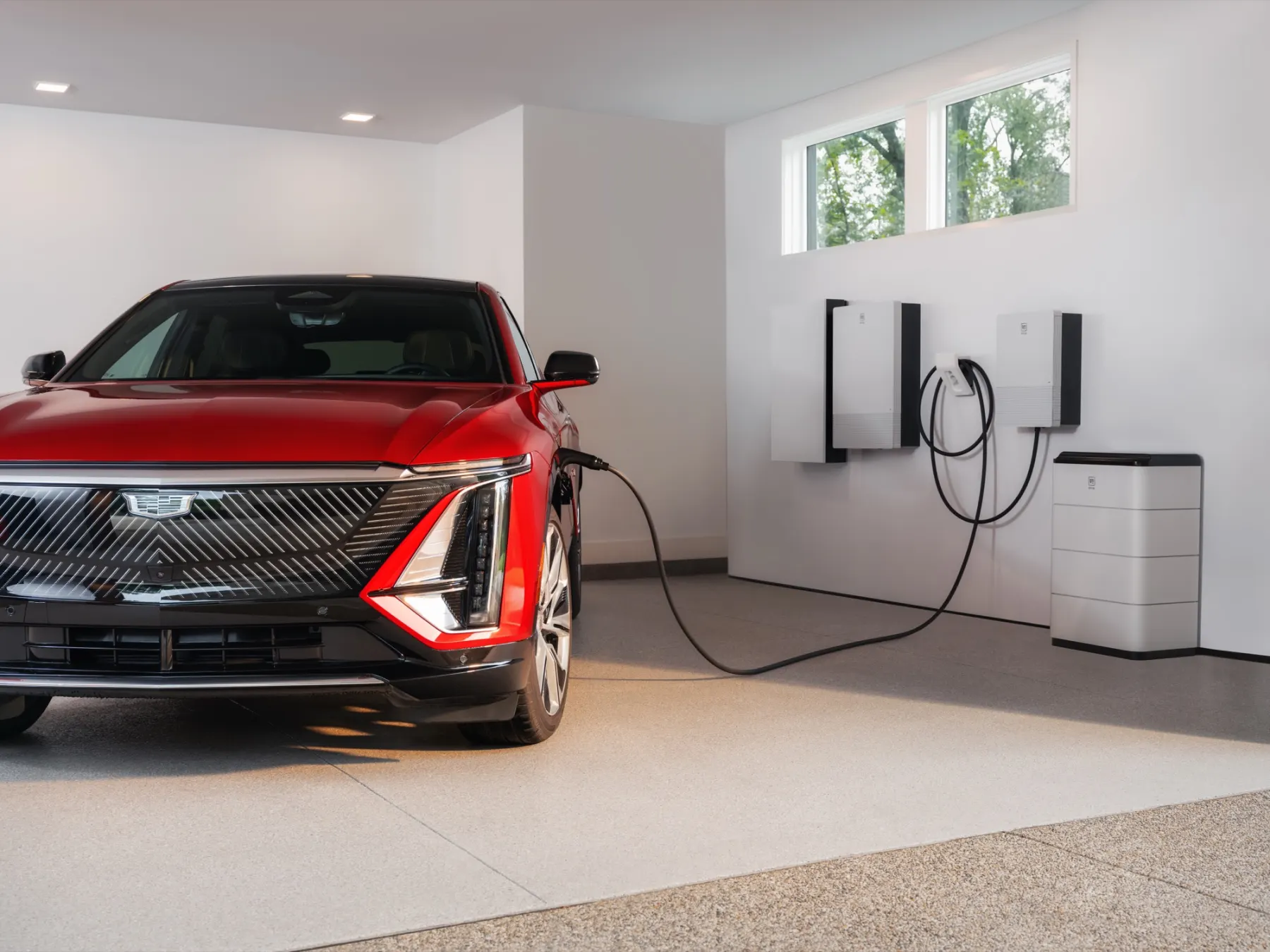
- Most EV owners charge at home overnight on a 240-volt Level 2 charger, which adds about 25 miles of range per hour by the U.S. Department of Energy's estimate.
- Have a licensed electrician check your panel and quote the full job, permit included, before you buy a charger.
- Nassau County is served by PSEG Long Island. Northern Westchester is split between Con Edison and NYSEG. Each utility has its own overnight rate and EV programs, and the terms change.
- The federal home charger tax credit does not apply to chargers placed in service after June 30, 2026, and the federal EV purchase credits ended in 2025.
Most EV owners in Nassau County and northern Westchester do nearly all of their charging at home, overnight, on a 240-volt Level 2 charger. Getting set up usually takes one visit from a licensed electrician, an electrical permit, and a look at your utility’s overnight rate. This guide walks through each step, from the panel check to the programs PSEG Long Island, Con Edison and NYSEG list today.
About 25 mi
Range added per hour on Level 2
U.S. Department of Energy estimate, 7.2 kW charger
About 5 mi
Range added per hour on Level 1
U.S. Department of Energy estimate, 120-volt outlet
10 PM to 6 AM
PSEG Long Island Super Off-Peak
Rate 195, every day
June 30, 2026
Federal charger credit cutoff
No credit for chargers placed in service after this date (IRS)
Level 1 or Level 2: which home charger you need
Most owners need a Level 2 charger on a 240-volt circuit, the same kind of circuit a clothes dryer uses. Level 1 uses an ordinary 120-volt household outlet. It needs no installation, but it is slow.
The U.S. Department of Energy’s Alternative Fuels Data Center puts the difference plainly. A Level 1 outlet adds about 5 miles of range per hour of charging. A typical home Level 2 charger, running at up to 30 amps and 7.2 kW, adds about 25 miles per hour.
| Level 1 | Level 2 | |
|---|---|---|
| Power source | 120-volt outlet | 240-volt circuit |
| Typical power | About 1.9 kW | Up to 7.2 kW |
| Range per hour | About 5 miles | About 25 miles |
| Electrician | Usually not | Yes |
| Best for | Backup, low mileage | Daily driving |
Those range figures assume an average EV. A full-size electric truck or SUV, like the GMC Sierra EV or HUMMER EV, uses more energy per mile, so it adds fewer miles per hour on the same charger. For a large battery, Level 2 is the only practical option at home.
Even so, the overnight math works for most households. Plug in at 10 p.m., unplug at 6 a.m., and a typical 7.2 kW charger adds roughly 200 miles of range by the Department of Energy’s estimate. That covers far more than a normal day of driving between Great Neck and Manhasset, or between Bedford and Mount Kisco.
The cheapest electricity for your EV is usually the electricity you use after the household goes to sleep.
 Denise KeiferBusiness Development Manager and EV Specialist, GMC Bedford Hills
Start with an electrician, before you buy the charger
The first step is a licensed electrician checking whether your electrical service can take a new 240-volt circuit.
Many homes in Great Neck, Manhasset, Port Washington, Chappaqua and Bedford were built decades ago, and their panels were sized for a different era. A charger runs for hours at a stretch, and electrical code requires headroom on a circuit that does that. So the breaker a charger needs is larger than the charger’s own amp rating. Your electrician sizes it.
Ask the electrician to check:
- Panel capacity. Is there room for a new 240-volt circuit, or do you need a panel or service upgrade?
- Distance. How far is the panel from where you park? Long wire runs cost more.
- Garage or driveway. An outdoor charger needs a unit and connection rated for the weather.
- Hardwired or plug-in. Some chargers plug into a 240-volt outlet. Others are wired in directly.
- Permits. Most towns and villages require an electrical permit and an inspection.
Ask for a written quote for the full job, including the permit, so there are no surprises.
If you buy a GM charger, GMC says its home chargers, including the GM Energy PowerShift and GM PowerUp, need professional installation. GMC also works with Qmerit, an installation network, to connect owners with local installers who can pull the required permits. You are free to use any licensed electrician you trust.
One more step before you buy: check your utility’s rebate rules. PSEG Long Island, for example, only gives its charger rebate for models on an approved list.
“I had an outstanding experience at GMC Bedford Hills. From start to finish, Luke, Denise, and Carl were professional, transparent, and genuinely focused on making sure I was comfortable with every step of the process.”
Your utility, its overnight rate and its EV programs
Nassau County is served by PSEG Long Island, and northern Westchester is served by either Con Edison or NYSEG, depending on your address.
| Area | Utility | Home EV options |
|---|---|---|
| Nassau County | PSEG Long Island | Charger rebate, overnight rate |
| Mount Kisco, Chappaqua | Con Edison | SmartCharge NY, time-of-use rate |
| Bedford Hills, Pound Ridge | NYSEG | OptimizEV, EV rate |
NYSEG serves most of Bedford, including Bedford Hills, along with Pound Ridge, Lewisboro and North Salem. Utility lines do not always follow town lines, so check a recent bill if you are not sure.
The cheapest electricity for your EV is usually the electricity you use after the household goes to sleep. Each utility rewards that in its own way. At Con Edison and NYSEG, you choose between a special rate and a rewards program.
PSEG Long Island. PSEG Long Island lists a $100 rebate on a qualified Level 2 charger, with an extra $300 (a $400 total) for customers in Disadvantaged Communities or on its Household Assistance Program. The charger has to be on the EPRI Vetted Product List, and a charger that came with the car does not qualify unless you can show you bought it separately. For rates, PSEG’s Super Off-Peak plan, Rate 195, has an overnight period from 10 p.m. to 6 a.m. every day that PSEG says is discounted 40% compared with the flat rate. Peak hours are 3 p.m. to 7 p.m. on weekdays, and Rate 195’s peak and regular off-peak prices are higher than the standard time-of-day rate. PSEG’s rebate page lists no end date, so confirm the program is open on psegliny.com before you buy.
Con Edison. Con Edison’s SmartCharge New York program pays 10 cents per kWh for charging between midnight and 8 a.m., all year. It also pays summer bonuses for avoiding weekday charging from 2 p.m. to 6 p.m., June through September. Customers on Con Edison’s residential time-of-use rate cannot earn SmartCharge incentives, so compare the two before choosing. Con Edison’s page lists no end date. Check coned.com for current terms.
NYSEG. NYSEG’s OptimizEV program pays rewards to single-family homeowners with a Level 2 charger who do most of their home charging off-peak, from 11:30 p.m. to 7 a.m. (12:30 a.m. to 8 a.m. during daylight saving time). A higher tier lets NYSEG manage your charging schedule. Customers on NYSEG’s EV time-of-use rate are not eligible. NYSEG has said program spots are limited, so check nyseg.com to see whether enrollment is open and what it pays today.
State and federal help in 2026
The federal EV and home charger credits are gone for new purchases, and New York’s Drive Clean Rebate is the main state program left for buyers.
According to the IRS, the federal clean vehicle credit does not apply to any vehicle acquired after September 30, 2025. The home charger credit, the Alternative Fuel Vehicle Refueling Property Credit, does not apply to chargers placed in service after June 30, 2026. If your charger went in on or before that date, the credit had its own location rules, so ask a tax professional whether you qualify.
New York’s Drive Clean Rebate, run by NYSERDA, is applied at participating dealers at the time of sale. The amount depends on the vehicle, and only models on NYSERDA’s list qualify. Funding comes in rounds, and the state announced more funding in April 2026. Check NYSERDA’s site for the current status and eligible models, and ask us whether a specific vehicle qualifies.
Sales tax applies to an EV the same way it applies to any other car. Our guide to New York sales tax when you lease or buy explains how it works in Nassau and Westchester.
Winter and charging away from home
Cold weather lowers every EV’s range, so warm the car while it is still plugged in and save public fast charging for longer trips.
In the cold the battery is less efficient, and heating the cabin takes energy. On a January morning in Katonah you will see a lower range estimate than in June. A few habits help:
- Precondition while plugged in. Use the vehicle app to warm the cabin and battery before you leave, so the energy comes from the wall and not from the battery.
- Use the heated seats and steering wheel. They use far less energy than heating the whole cabin.
- Park in the garage when you can. A warmer battery charges faster and starts the day more efficiently.
Ask for a written quote for the full job, including the permit, so there are no surprises.
Denise KeiferBusiness Development Manager and EV Specialist, GMC Bedford HillsHeading to the Hamptons, upstate or New England? GMC and Cadillac EVs can use a large public fast-charging network, including many Tesla Supercharger locations with a GM-approved adapter. The vehicle’s navigation and the GMC app can show chargers along your route. Our product specialists will set this up with you at delivery.
Talk to GMC Bedford Hills before you decide
If you are not sure an EV fits your driveway or your commute, our sales team at GMC Bedford Hills can walk you through charging, range and a test drive.
You will find us at 606 Bedford Rd, Bedford Hills, NY 10507, or call 914-666-7537. Sales hours are Monday to Friday 9:00 to 6:00 and Saturday 9:00 to 5:00. We are closed Sunday. Bring a photo of your electrical panel and where you park, and we can talk through what a home setup might involve for a Sierra EV or HUMMER EV. Visit the GMC Bedford Hills page for directions, or browse the full GMC lineup.
Our Sierra 1500 or Sierra EV guide compares gas and electric for truck owners in northern Westchester. If you are also weighing an electric SUV, our guide to Cadillac’s electric SUVs explains how those models compare.
Questions
Can I charge a GMC Sierra EV from a regular wall outlet?
A standard 120-volt outlet (Level 1) adds about 5 miles of range per hour for a typical EV, by the U.S. Department of Energy's estimate, and less for a full-size electric truck like the GMC Sierra EV. A wall outlet works as a backup, but most Sierra EV owners install a 240-volt Level 2 charger.
Do I need a permit to install a home EV charger in Nassau County or Westchester?
Usually, yes. A Level 2 home charger needs a new 240-volt circuit, and most towns and villages in Nassau County and Westchester require an electrical permit and inspection for that work. A licensed electrician normally files the permit for you.
Are there federal tax credits for EVs or home chargers in 2026?
Not for new purchases. The IRS says the federal clean vehicle credits do not apply to vehicles acquired after September 30, 2025, and the home charger credit does not apply to chargers placed in service after June 30, 2026. New York State and your utility may still offer programs, so check NYSERDA and your utility's EV page.
Which utility programs help with home EV charging on Long Island and in Westchester?
PSEG Long Island lists a rebate on qualified Level 2 chargers and a Super Off-Peak rate for overnight charging. Con Edison lists SmartCharge New York, which pays for off-peak charging. NYSEG lists its OptimizEV rewards program and an EV time-of-use rate. Confirm current terms on each utility's website before you enroll.
Written by Denise Keifer with the DriveWise editorial team. Prices, incentives and specifications change, so confirm details with the store before you buy. Editorial standards

Weidinger Auto: Always Moving Forward
Family-owned since 1938 · Six stores on Long Island and in Westchester