What Maintenance an EV Still Needs
An EV maintenance schedule in plain terms: tire rotations, brakes, filters, coolant and software, with Cadillac LYRIQ maintenance as the example.
Service Manager, Cadillac Mount Kisco
Reviewed by Chad Harris, General Manager, Cadillac Mount Kisco
Updated · 6 min read
Key points
- An EV skips oil changes, spark plugs and exhaust work, but it still needs regular tire rotations, inspections, brake checks, filters and fluids.
- Cadillac recommends rotating the tires on its EVs about every 7,500 miles, the same as its gas models.
- Brake fluid, cabin air filter and battery coolant are on a longer schedule. The exact intervals for your model and year are in the owner's manual.
- Winter in Westchester is hard on EV tires and brakes, so a fall inspection is worth booking.
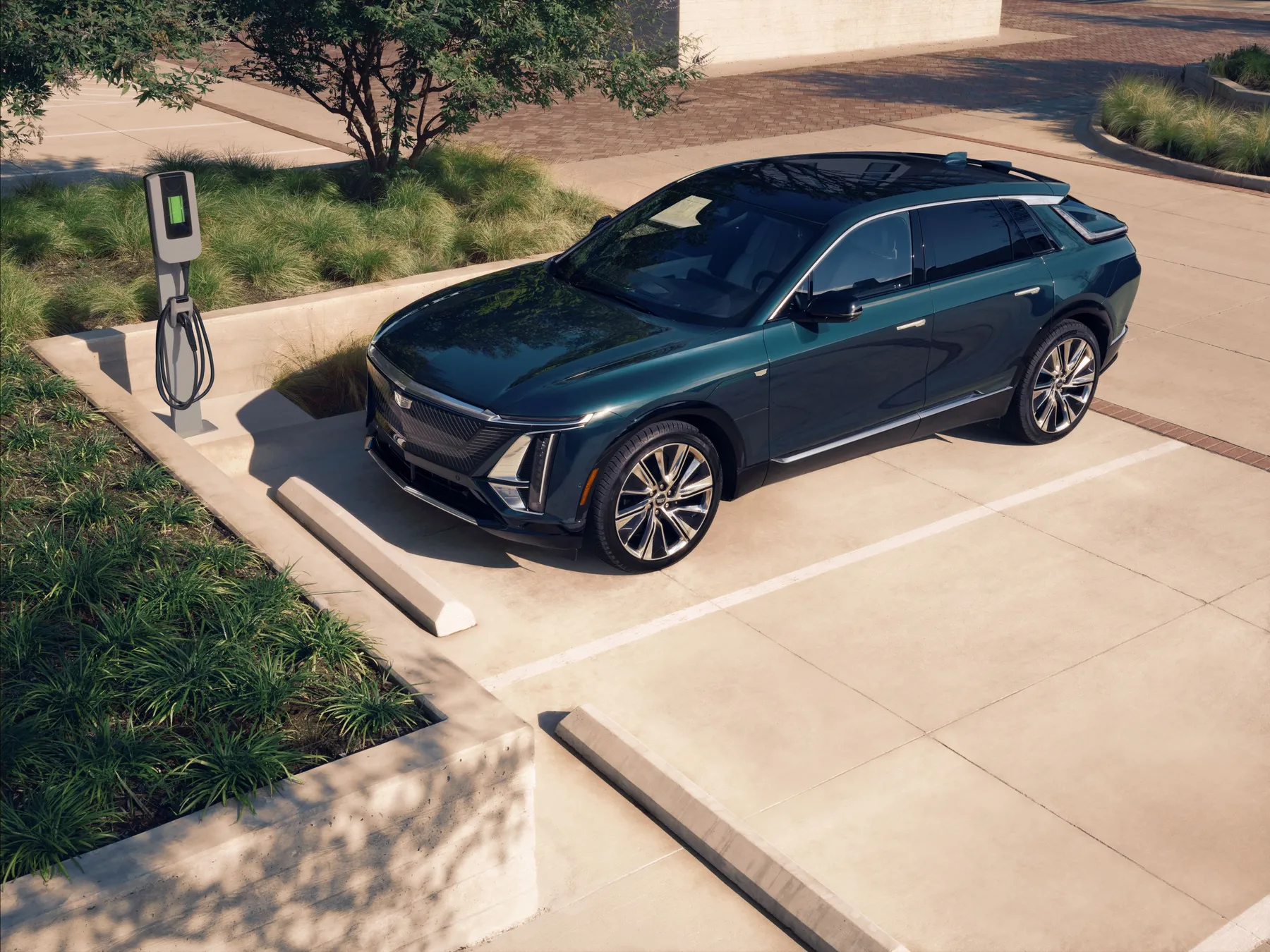
An EV needs less maintenance than a gas car, but not none. It skips oil changes, spark plugs and exhaust work, and it still needs tire rotations, inspections, brake checks and a short list of longer-interval items like the cabin air filter, brake fluid and battery coolant. On an electric Cadillac, the most frequent item is a tire rotation about every 7,500 miles.
About 7,500 mi
Tire rotation
Cadillac's recommendation for its EVs
No oil changes
What an EV skips
Also no spark plugs or exhaust system
If you drive an electric Cadillac in Mount Kisco, Pleasantville or the towns around them, it may surprise you that an EV still has a maintenance schedule. This guide walks through what is on it, why tires matter so much, and what a New York winter adds. We use Cadillac LYRIQ maintenance as the example, and the same ideas apply to the OPTIQ, VISTIQ and Escalade IQ.
What an EV skips, and what it still needs
An EV drops every item tied to a gas engine, but it keeps everything tied to the tires, brakes, suspension, cabin and cooling system.
There is no engine oil to change, no spark plugs, no timing belt, no exhaust system and no engine air filter. Cadillac notes that fewer moving parts means less scheduled maintenance. For a lot of owners, that is the biggest practical change from a gas car.
What stays is everything the car rides on and everything that keeps you comfortable:
| Item | Gas car | EV |
|---|---|---|
| Oil changes | Yes | No |
| Spark plugs | Yes | No |
| Tire rotation | Yes | Yes |
| Brake checks | Yes | Yes |
| Cabin filter | Yes | Yes |
| Coolant | Engine | Battery system |
The coolant line surprises people. An EV’s battery and electronics run best within a set temperature range, and a liquid cooling system keeps them there. That system has its own coolant, with its own service interval in the owner’s manual.
The EV maintenance schedule, item by item
The EV maintenance schedule is short: tire rotations and inspections come up most often, and the rest of the items come up every few years.
Here is what is on it, from most frequent to least:
- Tire rotation. Cadillac recommends rotating the tires on its EVs about every 7,500 miles, or as your owner’s manual recommends.
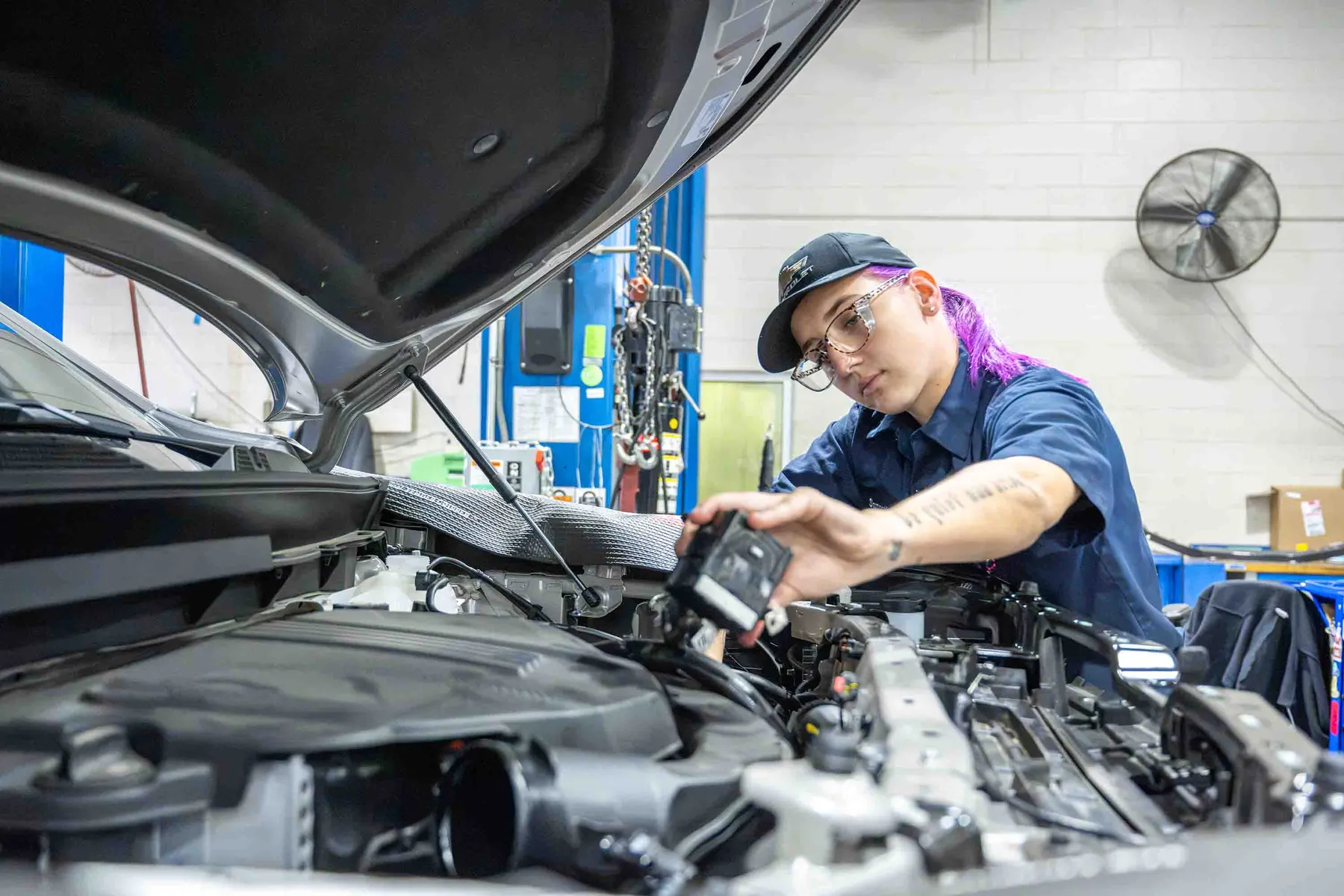
- Multi-point inspection. A technician checks tires, brakes, suspension, lights, wipers and fluid levels.
- Cabin air filter. It keeps dust and pollen out of the cabin. Cadillac’s EV schedule lists it at a longer interval, and its own pages do not all give the same figure, so follow the owner’s manual for your model and year.
- Brake fluid. Brake fluid absorbs moisture over time, even when the brakes see light use, so it is replaced on a time-based schedule in the owner’s manual.
- Battery coolant. The coolant for the battery and electronics is on a long interval. Check the owner’s manual for your model.
A few smaller items round it out: wiper blades, washer fluid, and the conventional 12-volt battery most EVs still use to run accessories and wake the vehicle up.
You will find a fuller explanation of how Cadillac sets its schedule, for gas and electric models, in our guide to the Cadillac maintenance schedule.
On an EV, tires are the main wear item, and rotations are the simplest way to make them last.
Why EV tire rotation matters more
EV tire rotation matters more because electric SUVs are heavy and deliver torque instantly, so tires can wear faster than on a comparable gas vehicle.
A battery pack adds a lot of weight, and an electric motor delivers its full pulling power the moment you press the pedal. Both put extra load on the tires. On an EV, tires are the main wear item, and rotations are the simplest way to make them last. Moving each tire to a new position evens out the wear between the front and rear axles.
Tire pressure matters too. Underinflated tires wear faster and cost range, and cold weather lowers pressure. Check it monthly, and more often when temperatures drop. Your Cadillac shows tire pressures on the driver information display, and the correct cold pressure is on the label inside the driver’s door.
When it is time for new tires, replace them with tires that meet the specification for your vehicle. EV tires are often designed for the extra weight and for low rolling resistance, which helps range. Our service advisors can tell you what your Cadillac calls for.
If you run winter tires, a changeover in late fall and again in spring is a natural time for a rotation and inspection. Our guide to seasonal tire changeovers explains the timing.
“Dropped off car for recalls and maintenance. Ceasar and team. Acted very professional. Service team made sure the Escalde was returned better than when dropped off. Highly satisfied. Also was given a detailed breakdown of work. And recommendations. Sam”
Brakes, regenerative braking and road salt
EV brake pads often wear slowly because regenerative braking does much of the slowing, but brakes that are used less still need regular inspection.
When you lift off the accelerator in an EV, the motor slows the car and sends energy back to the battery. That is regenerative braking. Many electric Cadillacs also offer one-pedal driving, which does even more of the slowing this way. The result is that the friction brakes do less work, and pads can last a long time.
There is a catch in our part of New York. Road salt and winter moisture can cause corrosion on brake parts, and brakes that are used lightly do not wear the surface rust off as quickly. That is why brake inspections stay on the schedule even when the pads look fine. A fall or early winter inspection is a good habit for anyone driving the hills around Mount Kisco and Pleasantville through the salt season.
For the rest of the cold-weather list, from wiper blades to washer fluid, see our winter car prep checklist. Our guide to EV range in a Northeast winter explains what the cold does to the battery.
The battery, software and warranty
The high-voltage battery needs no routine service from you, but software updates, recalls and the battery warranty are worth keeping track of.
Modern Cadillacs receive many software updates over the air, and some updates and recalls are handled at the dealer. Check for open recalls by VIN, and bring the vehicle in when a notice arrives. Our guide to checking for recalls shows how.
The battery is covered by its own warranty, separate from the bumper-to-bumper coverage. Our guide to the Cadillac EV battery warranty explains what it covers and for how long.
Cadillac says eligible new Cadillac owners get a first scheduled maintenance visit at a participating dealer at no additional charge, including a tire rotation and multi-point inspection. Terms vary by model year, so ask us whether your vehicle qualifies. Cadillac also offers prepaid maintenance plans for its electric models.
Service for your electric Cadillac at Cadillac Mount Kisco
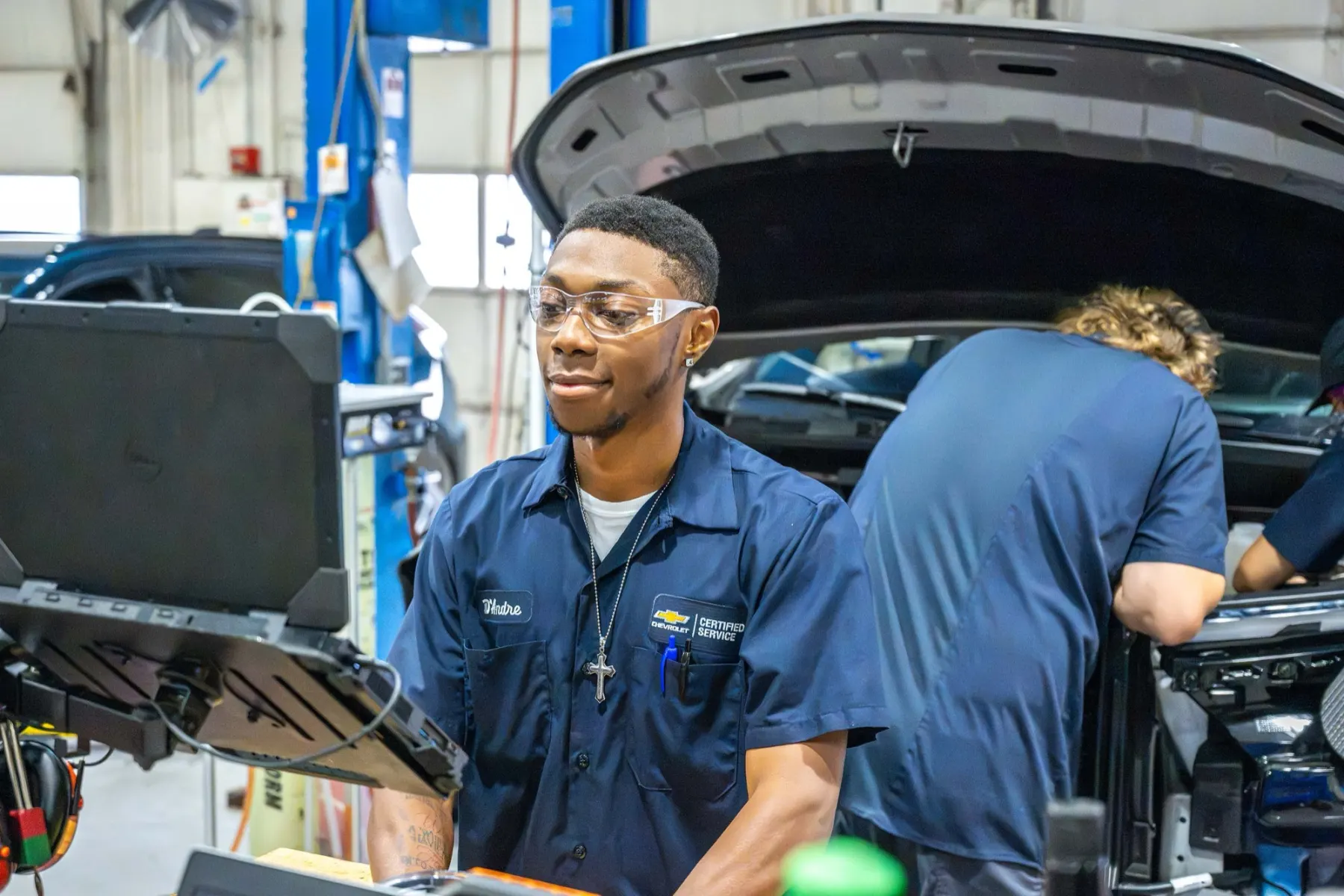
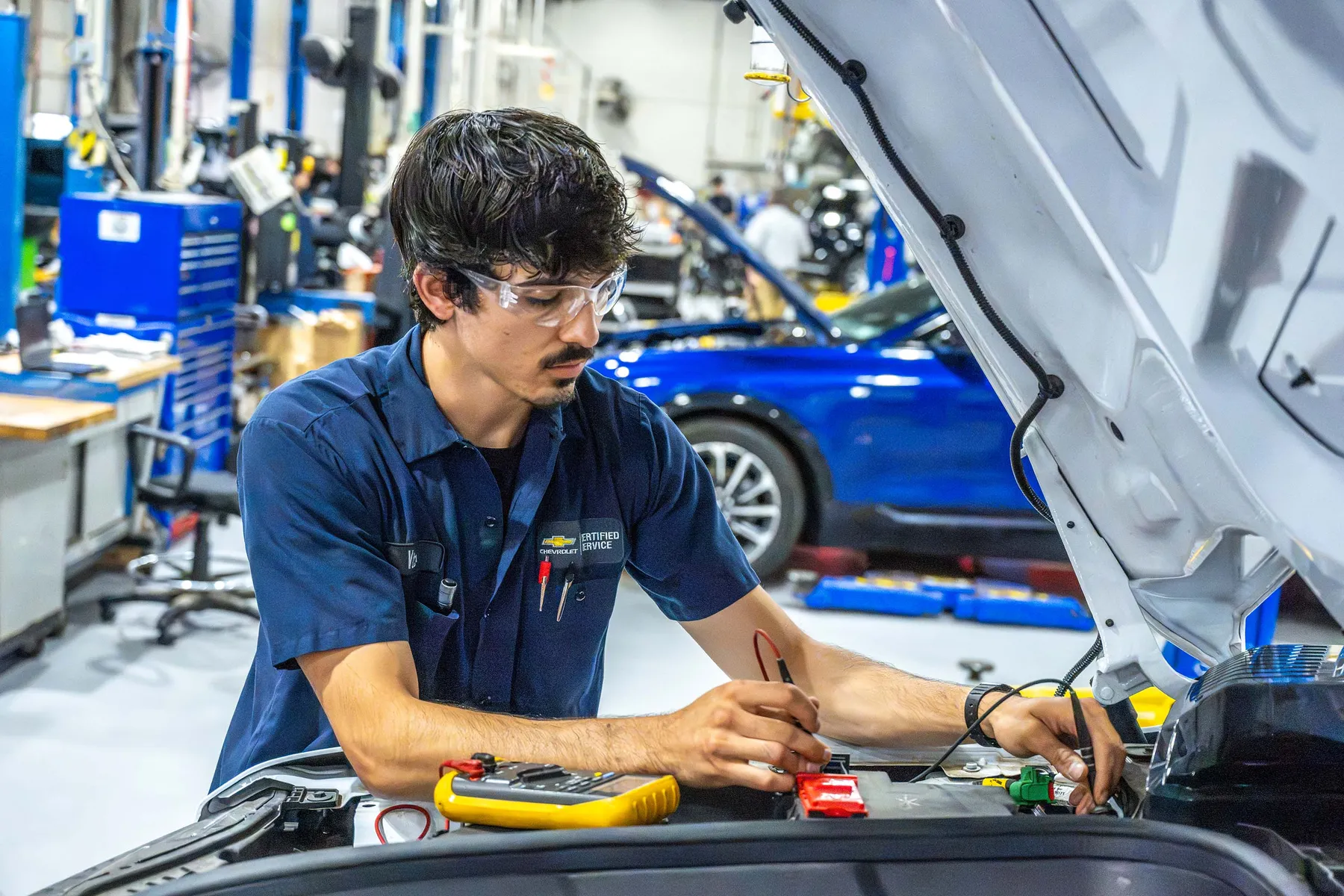
Our service department at Cadillac Mount Kisco handles scheduled maintenance, tire rotations, inspections and recall work on every electric Cadillac.
Our store opened in November 2025 with a covered service drive and 14 service bays. Visit Cadillac Mount Kisco at 271 N Bedford Rd, Mount Kisco, NY 10549-1106, or call 914-362-1300. Service hours are Mon-Fri 8:00-5:00, closed Saturday and Sunday. You can book service online and tell us your mileage, and we will check what is due on your Cadillac before you arrive.
Questions
What is on an EV maintenance schedule?
An EV maintenance schedule centers on tire rotations, multi-point inspections and brake checks, plus longer-interval items such as the cabin air filter, brake fluid and battery coolant. EVs have no engine oil, spark plugs or exhaust system to service. The owner's manual lists the exact intervals for each model and year.
What does Cadillac LYRIQ maintenance involve?
Cadillac LYRIQ maintenance includes a tire rotation about every 7,500 miles, regular multi-point inspections and brake checks, and longer-interval items such as the cabin air filter, brake fluid and coolant listed in the LYRIQ owner's manual. Cadillac Mount Kisco's service department can check what is due on a specific LYRIQ.
How often should EV tires be rotated?
Cadillac recommends an EV tire rotation about every 7,500 miles, or as the owner's manual recommends. EV tires can wear faster than tires on a similar gas vehicle because electric SUVs are heavy and deliver torque instantly, so regular rotations help them wear evenly.
Do EVs need brake service?
Yes. Brake pads on an EV often wear more slowly because regenerative braking does much of the slowing, but the brakes still need regular inspection. Brake fluid is replaced on the schedule in the owner's manual, and road salt in a New York winter can affect brake parts that are used less.
Written by Philip Augustine with the DriveWise editorial team. Prices, incentives and specifications change, so confirm details with the store before you buy. Editorial standards

Weidinger Auto: Always Moving Forward
Family-owned since 1938 · Six stores on Long Island and in Westchester