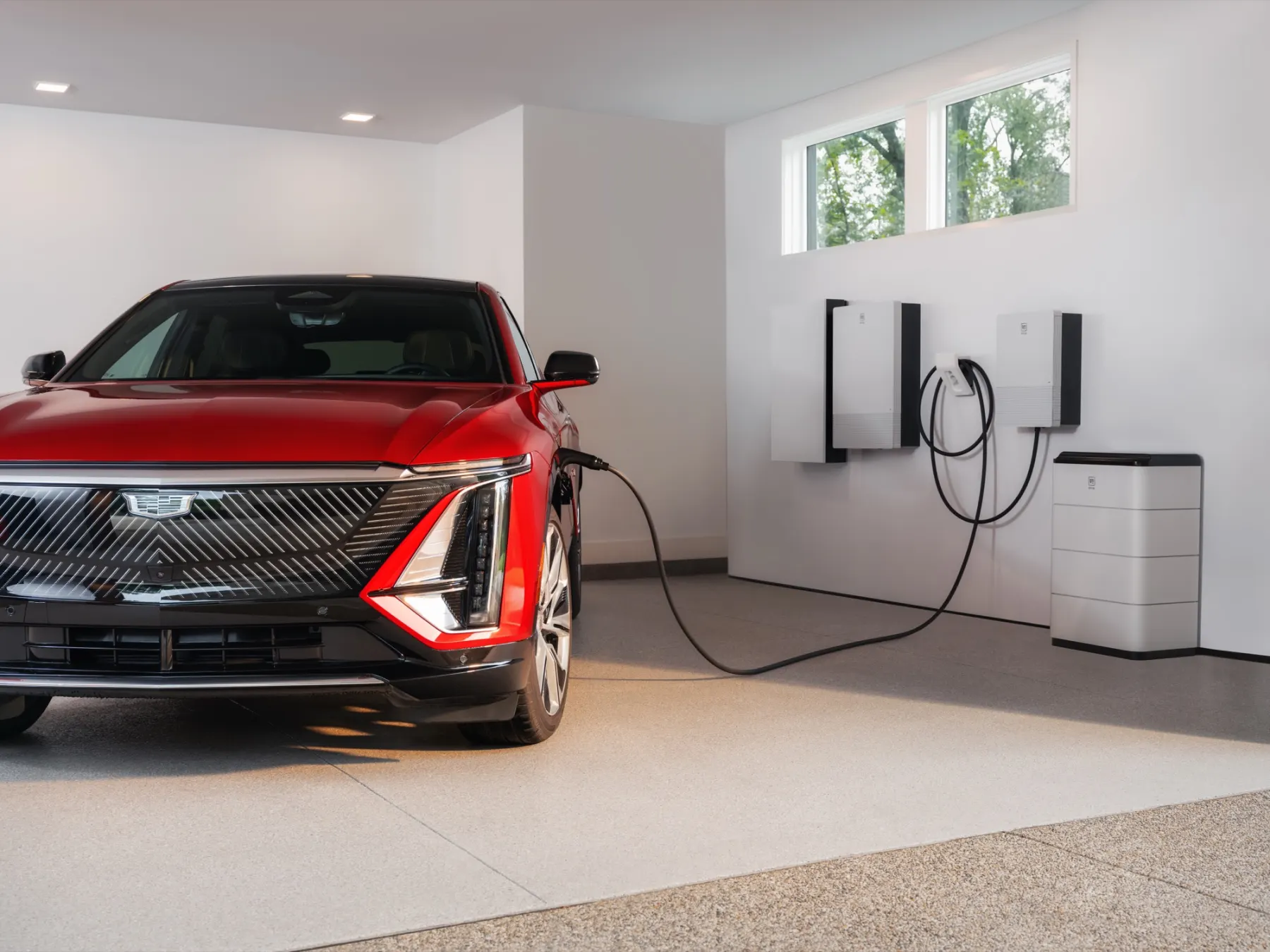
Level 1 or Level 2: Which Home Charger You Need
Level 1 vs Level 2 charging explained for Great Neck and Roslyn drivers: speeds, the 240V outlet, how long home charging takes, and when Level 1 is enough.
General Sales Manager, North Bay Cadillac and North Bay GMC
Reviewed by John Campanelli, Executive Manager, North Bay GMC
Updated · 7 min read
Key points
- Level 1 uses an ordinary 120-volt outlet and adds only a few miles of range per hour. Level 2 uses a 240-volt circuit and is several times faster.
- Most EV owners, and nearly every electric truck or large SUV owner, end up with Level 2 at home so the car is full each morning.
- Level 1 can be enough for a plug-in hybrid, a short daily commute, or as a backup while you wait for a Level 2 install.
- A 240V outlet or hardwired charger needs a licensed electrician, and usually a permit. Get the panel checked before you buy any equipment.
Most EV owners need Level 2 charging at home. Level 1 plugs into an ordinary 120-volt outlet and adds only a few miles of range per hour, while Level 2 runs on a 240-volt circuit and refills a normal day of driving overnight. Level 1 can work for a plug-in hybrid or a very short commute, but for an electric truck or SUV, plan on Level 2.
120 V
Level 1 power source
A standard household outlet
240 V
Level 2 power source
A dedicated circuit, like a dryer's
About 5 mi
Range added per hour on Level 1
U.S. Department of Energy estimate, typical EV
About 25 mi
Range added per hour on Level 2
U.S. Department of Energy estimate, 7.2 kW charger
If you live in Great Neck or Roslyn and are weighing an electric GMC, you may be wondering whether the outlet in your garage will do. The short answer is that it will charge the vehicle, just slowly. The rest of this guide explains how slowly, when that is fine, and what it takes to add a 240V outlet for an EV.
Level 1 vs Level 2 charging, side by side
The difference comes down to voltage: Level 1 uses 120 volts and Level 2 uses 240 volts, so Level 2 delivers several times more power.
Level 1 is the same kind of outlet you plug a lamp into. Nothing has to be installed, and you can use it anywhere there is a properly grounded outlet. Level 2 needs a dedicated 240-volt circuit, the kind of circuit an electric clothes dryer or range uses, plus either a 240-volt outlet or a charger wired directly to the circuit.
| Level 1 | Level 2 | |
|---|---|---|
| Voltage | 120 volts | 240 volts |
| Outlet | Standard household | Dedicated circuit |
| Range per hour | About 5 miles | About 25 miles |
| Electrician | Usually not | Yes |
| Best for | Backup, short trips | Daily driving |
The range figures in that table are the U.S. Department of Energy’s estimates for a typical EV, with Level 2 measured on a common 7.2 kW home charger. Real numbers vary. Faster Level 2 chargers exist, and the vehicle’s own onboard charger sets the upper limit on how much power it will accept.
For a big battery, Level 2 is the only practical way to start every morning with a full charge.
 Michelle ThorntonGeneral Sales Manager, North Bay Cadillac and North Bay GMC
How long it takes to charge an EV at home
How long it takes to charge an EV at home depends on three things: the size of the battery, the power the charger delivers, and how much power the vehicle can accept.
Battery size matters most. A compact EV with a modest battery is a different job from a full-size electric pickup. The GMC Sierra EV and HUMMER EV carry some of the largest batteries on the road, and they also use more energy per mile than a small car. On the same charger, they add fewer miles per hour.
That is why the overnight math looks so different on each level:
- Level 2 overnight. Plug in at 10 p.m. and unplug at 6 a.m., and a typical 7.2 kW charger adds roughly 200 miles of range for an average EV by the Department of Energy’s estimate. A large truck adds less, but still far more than a normal day of driving.
- Level 1 overnight. The same eight hours on a 120-volt outlet adds roughly 40 miles for an average EV, and less for a big truck. From a low battery, a full charge on Level 1 can take days.
GM sells home chargers with higher output than 7.2 kW, including an 11.5 kW unit that GMC lists as compatible with the Sierra EV and that must be hardwired by an electrician. Charging speeds vary by trim, battery condition, temperature and settings, so ask us for the figures for the exact model and trim you are considering, or check gmc.com.
“I have been purchasing vehicles from this dealership for many years now and when I asked Laura to find me an exact model that was limited production, she delivered as always with professionalism and expertise. I can’t say enough of everyone here from the finance manger to the service department.”
When Level 1 is enough
Level 1 can be enough when you drive few miles a day, the battery is small, or you need a stopgap until a Level 2 install is finished.
A plug-in hybrid is the classic case. Its battery is small enough that a night on a regular outlet often refills it. Level 1 can also suit a second car that covers short local trips, say a run from Roslyn to the Great Neck train station and back, and sits plugged in for most of the day.
It also makes sense as a backup. Many owners keep a Level 1 option for visits to family, a vacation rental, or the weeks between taking delivery and the electrician’s visit.
A few cautions apply to Level 1:
- Use a dedicated outlet if you can. A charging car draws power for hours at a time, which is different from a lamp or a phone charger.
- No extension cords or adapters. GMC’s guidance for its charge cord says not to use extension cords or wall adapters.
- Expect slow progress in winter. Cold weather lowers range, and part of the energy goes to warming the battery. Our guide to EV range in a Northeast winter explains why.
For a full-size electric truck driven every day, Level 1 alone rarely keeps up. That is not a flaw in the truck. It is simply a lot of battery to refill through an ordinary outlet. For a big battery, Level 2 is the only practical way to start every morning with a full charge.
What a 240V outlet for an EV involves
Adding a 240V outlet for an EV means a licensed electrician runs a new dedicated circuit from your panel to where you park, and in most towns that work needs a permit and an inspection.
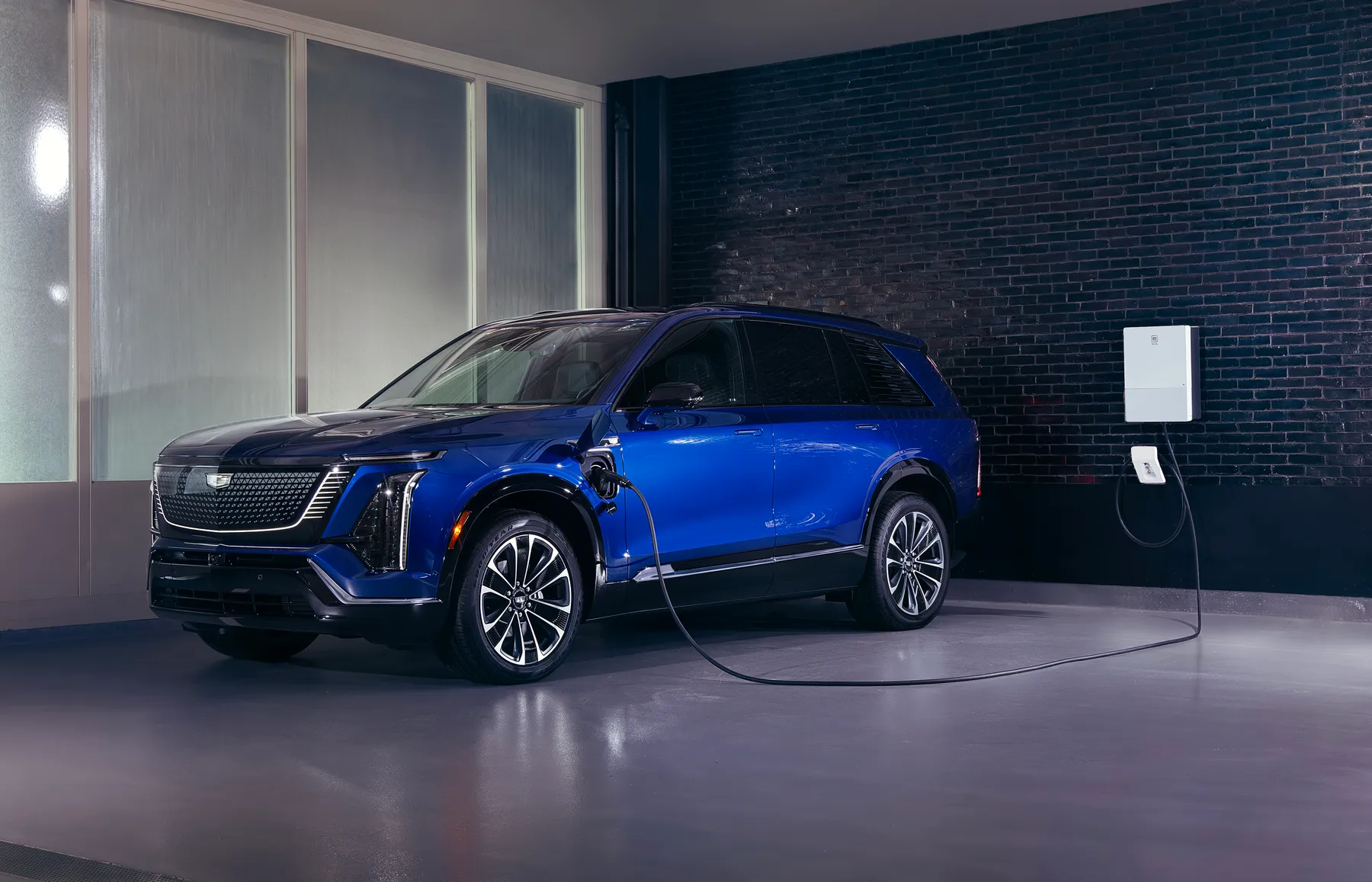
There are two common ways to set it up:
- A 240-volt outlet. The electrician installs an outlet, often a NEMA 14-50, and you plug in a portable charging cord. GMC’s Dual Level Charge Cord, standard on select EV models and also sold as an accessory, can swap between a 120-volt plug and a NEMA 14-50 plug. GMC says the 240-volt side is designed for a dedicated circuit of 40 amps or more and recommends a qualified electrician check the installation.
- A hardwired wall charger. The charger is wired directly to the circuit. This is how the higher-output GM chargers are installed, and it is a tidy, permanent option for a garage.
Before you buy anything, have the electrician check your panel. Many homes on the North Shore were built decades ago, and their panels were sized long before anyone charged a car at home. The electrician will tell you whether there is room for a new circuit or whether the panel or service needs an upgrade, and will size the breaker correctly.
Our practical guide to charging an EV at home walks through the electrician visit, permits and utility rates in more detail.
Paying for a home charger in 2026
The federal home charger tax credit does not apply to chargers placed in service after June 30, 2026, so the help that remains comes mainly from your utility.
Great Neck and Roslyn are served by PSEG Long Island. PSEG lists a rebate on qualified Level 2 home chargers, along with a Super Off-Peak rate that makes overnight charging cheaper. The charger has to be on PSEG’s approved list, and program funding is limited each year. Our guide to PSEG Long Island’s home charger rebate covers who qualifies, which chargers count and how to apply. Confirm the current terms on psegliny.com before you buy.
Level 1 needs no new equipment, so there is no rebate to chase. But it also cannot take full advantage of an overnight rate window, because it may not finish the job before the window closes.
The short answer is that it will charge the vehicle, just slowly.
Michelle ThorntonGeneral Sales Manager, North Bay Cadillac and North Bay GMCTalk it through at North Bay GMC
Our sales team at North Bay GMC can walk you through the charging equipment that comes with an electric GMC, the home chargers GM sells, and what a setup might look like for your garage or driveway.
GMC’s electric lineup includes the Sierra EV pickup and the GMC HUMMER EV pickup and SUV. Each one can charge on Level 1 or Level 2 at home, and each one charges far more practically on Level 2. If you are still deciding between gas and electric, our comparison of the Sierra 1500 and Sierra EV can help.
Visit North Bay GMC at 720 Northern Blvd, Great Neck, NY 11021, or call 516-466-6200. Sales hours are Mon-Thu 9:00-8:00, Fri-Sat 9:00-6:00 and Sun 12:00-4:00. Bring a photo of your electrical panel and where you park, and we can talk through the options before you call an electrician. You will find more charging guides in DriveWise Electric.
Questions
What is the difference between Level 1 and Level 2 charging?
Level 1 charging uses a standard 120-volt household outlet and adds a few miles of range per hour. Level 2 charging uses a 240-volt circuit, like the one a clothes dryer uses, and adds range several times faster. Most home EV owners use Level 2 for daily charging.
How long does it take to charge an EV at home?
Home charging time depends on the battery size, the charger's power and the vehicle's onboard charger. On Level 2, most EVs refill a normal day of driving overnight. On Level 1, a large battery like the one in a GMC Sierra EV can take days to fill from low, so Level 1 suits topping up rather than full charges.
Do I need a 240V outlet for an EV?
A 240V outlet for an EV is not required, since any EV can charge slowly from a 120-volt outlet. For a full-size electric truck or SUV such as the GMC Sierra EV, a 240-volt outlet or a hardwired Level 2 charger is the practical choice. A licensed electrician should install it on a dedicated circuit.
Can North Bay GMC help me choose a home charger?
Yes. The sales team at North Bay GMC in Great Neck can explain the charging equipment that comes with an electric GMC and the GM home chargers sold as accessories. A licensed electrician handles the installation and the permit.
Written by Michelle Thornton with the DriveWise editorial team. Prices, incentives and specifications change, so confirm details with the store before you buy. Editorial standards

Weidinger Auto: Always Moving Forward
Family-owned since 1938 · Six stores on Long Island and in Westchester